Why is information security so important?

Information security becomes more and more important as we today have a lot of information that is valuable for us. Read more about what information security really is and why every organisation needs to start working with it.
Understanding Information Security
Information is a basic building block in an organisation, in the same way as employees, premises and equipment. Information expresses knowledge or message in a concrete form. We can communicate information, we can store it, we can refine it and we can control processes with it – we simply need it for most of what we do. Therefore, information is valuable and needs to be protected based on the needs. Information can be valuable both for organisations and for the individual, sometimes it is even vital. If such information is lost or incorrect, it can have
catastrophic consequences.
Questions we cover in this article
Why do we need to protect
our information?
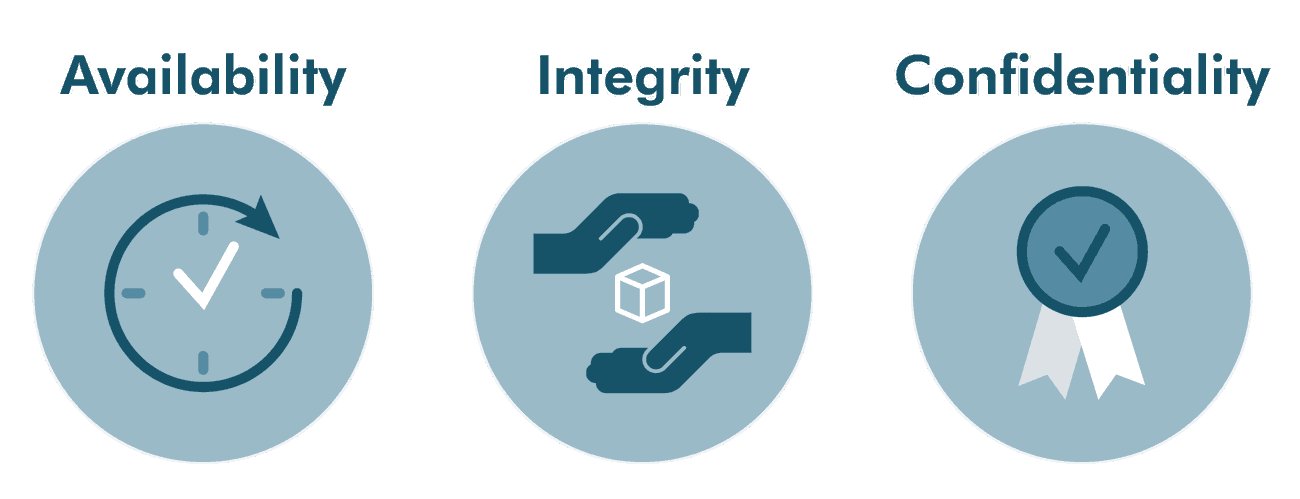
Availability: So that the Information is accessible whenever it is needed.
Integrity: So that we can trust that the information is correct and has not been tampered with, altered, or destroyed by unauthorized parties.
Confidentiality: So that authorised persons may take part in it.
Note that even a system, for example an industrial control system, if classified as a protected asset should be protected in this way. In that case, it is not information you protect but the system itself.
What is information security?
Information security is above all about preventing information from being leaked, distorted and destroyed. It is also about having the right information available to the right people, and at the right time. Information should not fall into the wrong hands and be misused. Information security applies to both individuals and organisations, both in business and in public activities. Information security therefore covers the whole of society.
What is the difference between cybersecurity and information security?
One of the main reasons for these two terms to be used interchangeably is that both cybersecurity and information security are related to security and safekeeping a computer system against data threats and information breaches.
But while cybersecurity is about protecting networks, devices, programs, and data from attacks or unauthorised access, information security is above all about preventing information from being leaked, distorted, and destroyed. Information security is also about all data, no matter its form. This means that in information security, the primary concern is protecting the confidentiality, integrity, and availability of the data. In cybersecurity, the primary concern is protecting against unauthorised electronic access to the data.
Information security protects your assets
The increasing dependence on information technology means increased risks – there is a clear increase in incidents such as data breaches, fraud, and the spread of malicious code. The actors behind it consist of individuals but also in the form of organised crime, terrorists, and government.
Need to Improve Your Information Security? We are at Your Service.
What can lack of information security lead to?
Lack of information security can have consequences in the form of the business not being able to be conducted in an appropriate and efficient manner, lack of protection of personal integrity and disruptions in socially important activities. Deficiencies in information systems can also affect physical assets. Damage to the critical infrastructure can have fatal consequences. Incidents that lead to the inability or destruction of such systems and assets can lead to serious crises affecting the financial systems, public health, national security, or combinations thereof.
It can also lead to a deterioration in confidence in services and underlying actors. Serious and repeated disruptions can lead to crises of confidence, which can also spread to more actors and services as well as to other sectors.
What is systematic information security work?
All organisations and companies live and operate in an environment where they are exposed to different types of risks in different areas. Financial risks, process-related risks, technology-related risks, personnel-related risks, and legal risks are all examples of risks that many organisations work with on a daily basis.The work with information security shall, in the same way as other risk management, strive to identify and manage the risks to which it is exposed in the area of information security.
Through systematic work with information security, organisations can increase the quality and confidence in their operations. Starting from established standards in the work with information security increases the chance of success.
The work with information security includes introducing and managing administrative regulations such as policies and guidelines, technical protection with, among other things, firewalls, and encryption, as well as physical protection with, for example, shell and fire protection. It is about taking a holistic approach and creating a functioning long-term way of working to give the organisation’s information the protection it needs.
Who needs cybersecurity?
Infrastructure
Cybersecurity is crucial for organisations that directly affect the nation’s – or world’s – wellbeing and safety. Critical Infrastructure have many national security and safety implications. Cyberattacks to critical infrastructure sectors like energy, transportation, healthcare, and water systems can be catastrophic, causing physical harm or severe disruption in services.
Defence
The defence sector needs cybersecurity to protect national security and military operations, as modern defence systems depend on digital networks for communication, intelligence, and weapons control. Cybersecurity helps protect sensitive data from unauthorized access. Without strong security, cyberattacks could disrupt command systems or compromise missions. That is why cybersecurity is essential to keep defence systems reliable, secure, and operational.
Authorities
For organisations such authorities its essential to work with cybersecurity to protect public services, government systems, and citizen data. Government departments rely on digital networks to manage records, communication, and services. Cybersecurity helps prevent data breaches, identity theft, and disruption of public infrastructure. Without strong protection, cyberattacks could affect law enforcement, emergency services, or national databases.
Industries
Every industry needs cybersecurity because all industries use technology to store and manage information. Cybersecurity helps protect important business data from hackers and cyberattacks. It prevents financial losses caused by data breaches or system damage. Without it, industries are at greater risk of disruptions and security threats.
Which regulations require companies to work with cybersecurity?
During the recent years many new regulations, like the NIS Directive and stricter national security legislation have been implemented.
The NIS Directive aims to promote security measures and boost EU member states’ level of protection of critical infrastructure. In other words, it improves information security of operators in sectors that provide essential services to our society and economy.
The Swedish Protective Security Act clarifies the obligations for companies with security-sensitive activities and the importance of the operators performing security protection analyses for their operations
In 2020 the new EU guidelines regarding cybersecurity for banks came into force. Now it is clearer how various financial services are to manage internal and external risks linked to IT and security.
How do I start working with information security?
New laws have been passed to increase preparedness. These require that organisations delivering services essential to society increase their information security. However, it is not always easy to know where to begin. Here are eight pieces of advice to get you on the right track.
Realise that information security means more than technology
Today, a great deal of information is managed in IT systems, often making information security equivalent to IT security. But, people and processes have to be included, and all parts are equally important to succeed. Systematic and continuous work based on assets, threats and risks is vital for creating sustainable protection.Information security work has to be linked to your organisation´s risk management.
All security work has to be based on how risks are managed in the environment where you operate. Information security-related risks have to be treated the same way as other risks.Ensure that management takes its responsibility
The responsibility for security work always lies with management, as only management can decide not to do something about security risks. Given how the rate of cyberattacks are accelerating, a decision not to invest in information security means that both the organisation and its management take a huge financial risk.Review procedures and processes
Information security encompasses the entire organisation´s operations and all information, regardless if it is in computers or on a piece of paper. Start mapping out routines and processes, who has access to information and systems, and the state of your security thinking.Ensure the right resources
Information security work must be conducted systematically and continuously to ensure an adequate level of information security in an organisation. For successful information security work, you have to have management´s commitment and the right resources.Start with an analysis
Systematic information security work should always be adapted to the specific circumstances of an organisation. A recommendation is to start with an analysis of both the outside world and your operations. Based on the results, it is also possible to decide which security measures have to be implemented.Develop a security policy to maintain information security
Regulatory documents such as a security policy are the formal framework for your information security work. In these, you have to specify what should be available, what should be done, as well as how it should be done.Get help from those with in-depth information security knowledge
Getting started with systematic information security work on your own can feel a little overwhelming. If possible, get help from those with extensive knowledge about information security.
FAQ
What are the consequences of a lack of information security?
A lack of information security increases the risk of being exposed to cyberattacks and can have serious consequences for the affected organisation. Here are some examples:
Productivity losses: Large productivity losses as the attack can lead to interruptions and even longer production stops. The attack can also result in a more lasting deterioration in productivity.
Data breach: Leakage or even loss of personal information about customers. Intellectual property rights are also at risk of being stolen.
Reputational damage: The trust and reputation of the company can be severely damaged, which can lead to difficulties in gaining new customers in the future and difficulties in obtaining financing.
Financial costs: Large costs can arise in connection to the attack, among other things to pay external service providers to solve the problems with shut down computers and more, but also for extra work internally to solve the situation. It can also entail costs if you as a company do not meet the various requirements placed on the business.
Business closure: There is a risk that the company will be forced to close its entire business, at least temporarily, which for a lot of businesses that are based on the fact that they are constantly running is a serious threat.
Cybersecurity vs information security
Cybersecurity focuses on protecting networks, devices, and data from attacks or unauthorized access. Information security focuses on safeguarding all data, regardless of form, by ensuring its confidentiality, integrity, and availability.
How do I find the right solution for us?
If you feel insecure on what solution that fits your business needs, please feel free to contact us at Advenica.
We have extensive experience of information security and can offer advice, expertise, products and services that solve your challenges. We are at your service.
What is information assets?
Information assets are valuable data, information, and knowledge that organizations use to operate, make decisions and achieve strategic objectives.
Sectors We Serve


Contact us
Let's find the right solution for you. We are at your service.

Rickard Nilsson
COO
