Why invest in cybersecurity

Learn about the many reasons to invest in cybersecurity. Not having sufficient protection can end up costing far more in the long run — and we cover all of it in this article.
Questions we cover in this article
Why invest in cybersecurity?
There are a lot of reasons to invest in cybersecurity. It can become much more expensive not to have enough protection, for example during a ransomware attack where the attacker locks or encrypts data until a ransom is paid, which may or may not give the victim access to the files again.
The incentive to invest in cybersecurity varies from organisation to organisation. Some must by law, some need to have a more secure solution than a firewall. What matters is that you know what level of protection that your organisation needs!
When do you need to invest in cybersecurity?
When you must according to law and regulations
You might have to follow a law saying that you must use approved encryption products. One of these laws is the Swedish Protective Security Ordinance. This regulation entails that all organisations, public and private, that handle information that is classified as needing security protection and is to be communicated to an information system outside of the organisation’s control, must protect the information with the help of cryptographic functions approved by the Swedish Defence. This applies both for the one sending, and receiving, secret information.
Advenica’s solution for network encryption, SecuriVPN, provides customers with the strongest protection possible for their IP networks. It is approved for handling information up to and including SECRET.
You might also have demands for Cross Domain Solutions approved for HEMLIG/TOP SECRET level. Advenica’s Data Diodes DD1000A and DD1000i offer a powerful solution for effective, risk free and ensured one-way data flow between security domains.
When you should according to standard or the NIS Directive
There are also standards and directives, e.g. the NIS Directive, that could be an incentive to invest in your cybersecurity.
The NIS Directive aims to promote security measures and boost EU member states’ level of protection of critical infrastructure. The NIS Directive tightens the requirements for information security in terms of integrity and availability. If you need to follow this type of directive, it is a good idea to use Advenica’s products! Suitable products are our Data Diodes DD1000A, DD1000i, DD1G or our ZoneGuard. Advenica’s ZoneGuard enables a strictly controlled and filtered information exchange between networks and security domains.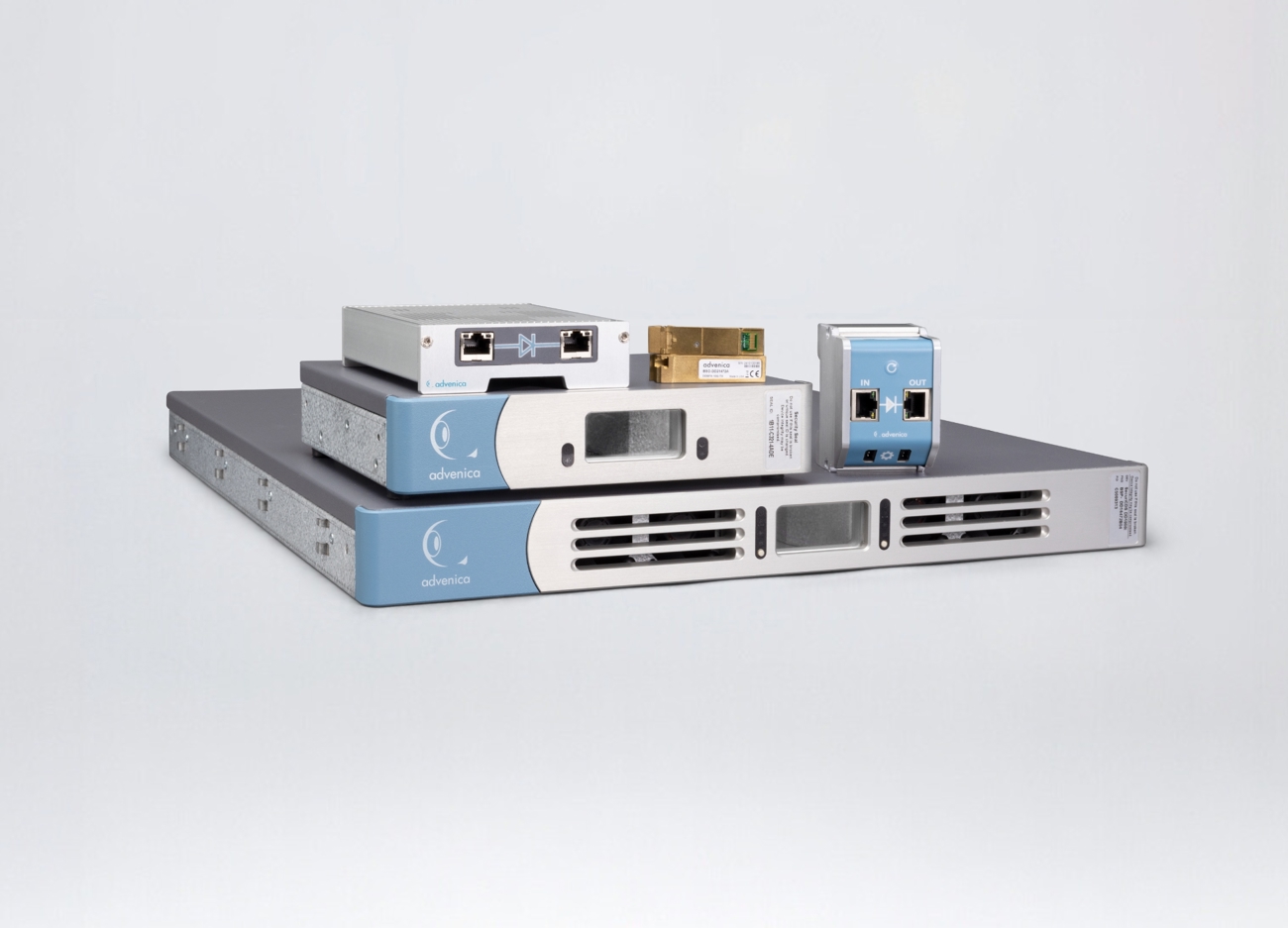
Want to learn more about our different products and solutions?
When you need to ensure a one-way information flow
If you need to ensure a one-way information flow, you need a data diode – we can help you here! When sensitive systems, such as ICS systems, are connected to other networks, a major security threat arises and security measures need to be taken to prevent intrusion and to maintain the integrity of the network.
Data diodes can prevent intrusions and leaks, increases network security and ensures that no malicious information can enter and is therefore the best way to protect sensitive systems and confidential data. Advenica’s Data Diodes are network devices for one-way communication that bridge two security domains of the same or different security levels.
Data diodes can prevent intrusions and leaks, increases network security and ensures that no malicious information can enter and is therefore the best way to protect sensitive systems and confidential data.
When you need to ensure that no unencrypted information is sent
Do you need more than software to secure your communication? The cyber threat aimed at your digital communication, such as Human-to-Machine (H2M), Machine-to-Machine (M2M), Internet-of-Things (IoT) or tactical defence communication, get increasingly sophisticated and advanced. Also, the news more and more frequently report major security incidents. It is evident that a solution designed to withstand current and future cyber challenges is essential. Advenica’s SecuriVPN ensures long-term, sustainable communication protection in these quantum times.
When you are using a firewall
Do you need more protection than just a firewall? If you need to transfer information to or from a security sensitive network, a firewall should not be the only solution you chose to enhance your cybersecurity. Though a firewall strives to protect the network, a high assurance addition is also needed. Advenica can offer tailor-made solutions depending on your needs. For example, Advenica’s ZoneGuard secures your two-way communication by using allow and blocklisting.
Do you need higher security? We are at your service.
Who needs cybersecurity?
Infrastructure
Cybersecurity is crucial for organisations that directly affect the nation’s – or world’s – wellbeing and safety. Critical Infrastructure have many national security and safety implications. Cyberattacks to critical infrastructure sectors like energy, transportation, healthcare, and water systems can be catastrophic, causing physical harm or severe disruption in services.
Defence
The defence sector needs cybersecurity to protect national security and military operations, as modern defence systems depend on digital networks for communication, intelligence, and weapons control. Cybersecurity helps protect sensitive data from unauthorized access. Without strong security, cyberattacks could disrupt command systems or compromise missions. That is why cybersecurity is essential to keep defence systems reliable, secure, and operational.
Authorities
For organisations such authorities its essential to work with cybersecurity to protect public services, government systems, and citizen data. Government departments rely on digital networks to manage records, communication, and services. Cybersecurity helps prevent data breaches, identity theft, and disruption of public infrastructure. Without strong protection, cyberattacks could affect law enforcement, emergency services, or national databases.
Industries
Every industry needs cybersecurity because all industries use technology to store and manage information. Cybersecurity helps protect important business data from hackers and cyberattacks. It prevents financial losses caused by data breaches or system damage. Without it, industries are at greater risk of disruptions and security threats.
FAQ
What is a vulnerability in cybersecurity?
A cybersecurity vulnerability is a weak spot in a system, network, software or process that attackers can use to cause damage.
The first step for an organisation to reduce these weak spots is for organisations and employees to practice good cyber hygiene. For example, ignoring the following habits can put an organisation at serious risk:
Use strong and unique passwords, together with a password manager.
Use multi-factor authentication (MFA) for an additional layer of security.
Keep operating systems, applications, and antivirus software up to date.
Establish standards for recognising and avoiding phishing emails, scams, and suspicious links.
Encrypt connections, avoid public Wi-Fi, and use a VPN whenever possible.
Regularly back up important files to an external drive or secure cloud storage.
Lock screens, enable biometric authentication, and disable unused Bluetooth or other connectivity options.
Maintaining these practices is the first step in reducing vulnerabilities and protecting sensitive information across the organisation.
What is phishing in the context of cybersecurity?
The dishonest presentation of e.g. an e-mail or fake website that enables someone to retrieve sensitive information from the person that has received the message/visited the link (for example passwords or credit card information).
What is cybersecurity compliance?
Cybersecurity compliance refers to the process of ensuring that an organisation follows laws, regulations, standards and internal policies related to information security. It involves implementing the necessary controls and procedures to protect data, systems and networks while meeting legal and industry requirements related to the sector the organisation belong to.
If you need guidance on how to achieve compliance, contact us at Advenica. We have extensive experience supporting customers in the defence, infrastructure, authorities, and the industry sector to meet their regulatory obligations.
What is the main purpose of cybersecurity?
The main purpose of cybersecurity is to protect systems, networks, and data from digital threats such as unauthorized access, cyberattacks, and data breaches. Cybersecurity helps organisations to ensure that their information remains confidential, accurate and available when needed.
Sectors We Serve


Contact us
Let's find the right solution for you. We are at your service.

Rickard Nilsson
COO
